Case study / SOUND / SYSTEMS
AcousticSystems
OngoingAn evolving series of loudspeaker projects moving from a first passive 2.1 build toward DSP, measurement and more deliberate acoustic design.
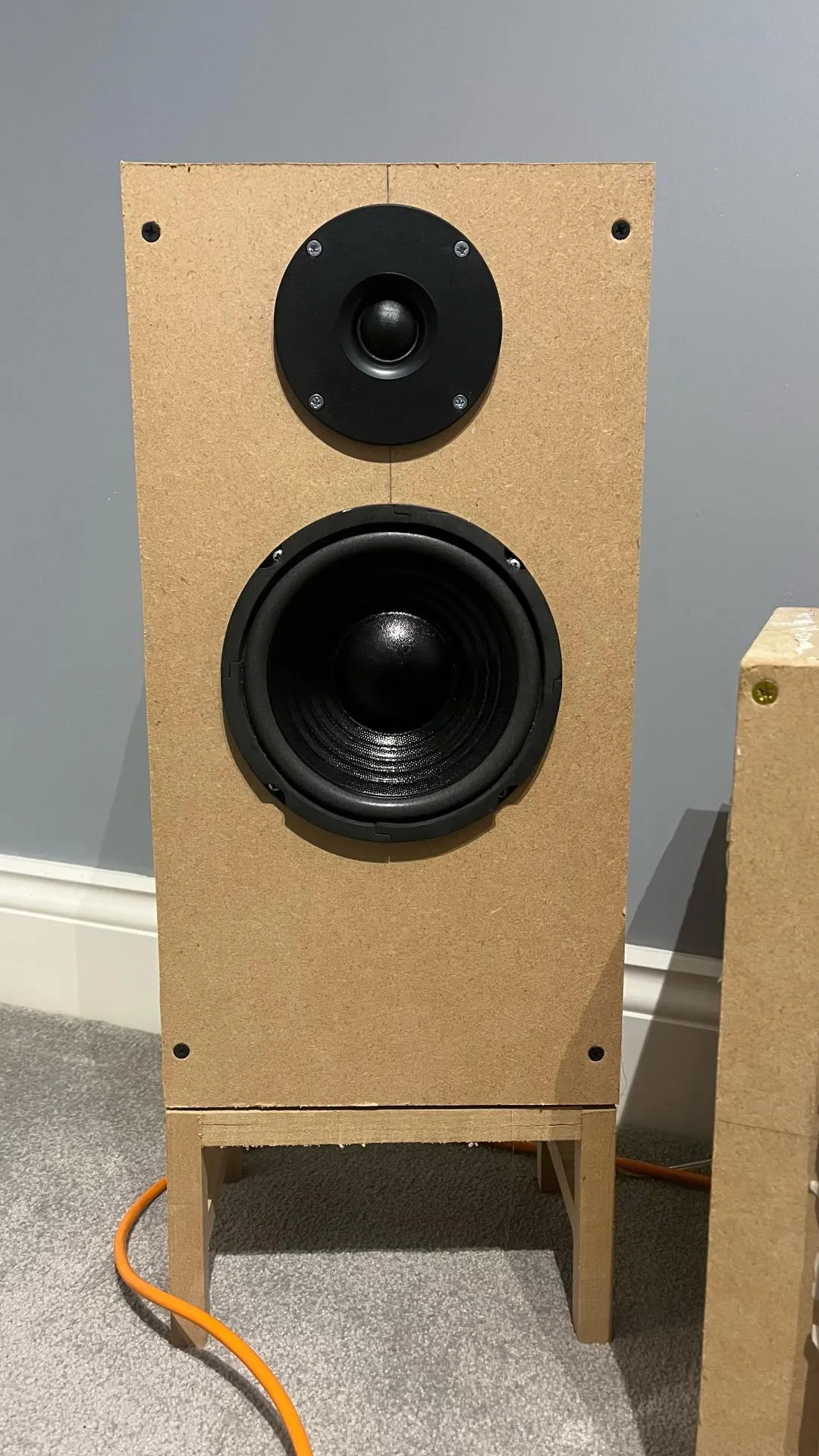
My audio work has moved from a completed first 2.1 system toward active DSP, acoustic measurement and more deliberate physical packaging. The first build met my listening goal, but it also exposed weaknesses in the way I designed and manufactured it.
Foundation: the completed 2.1 system
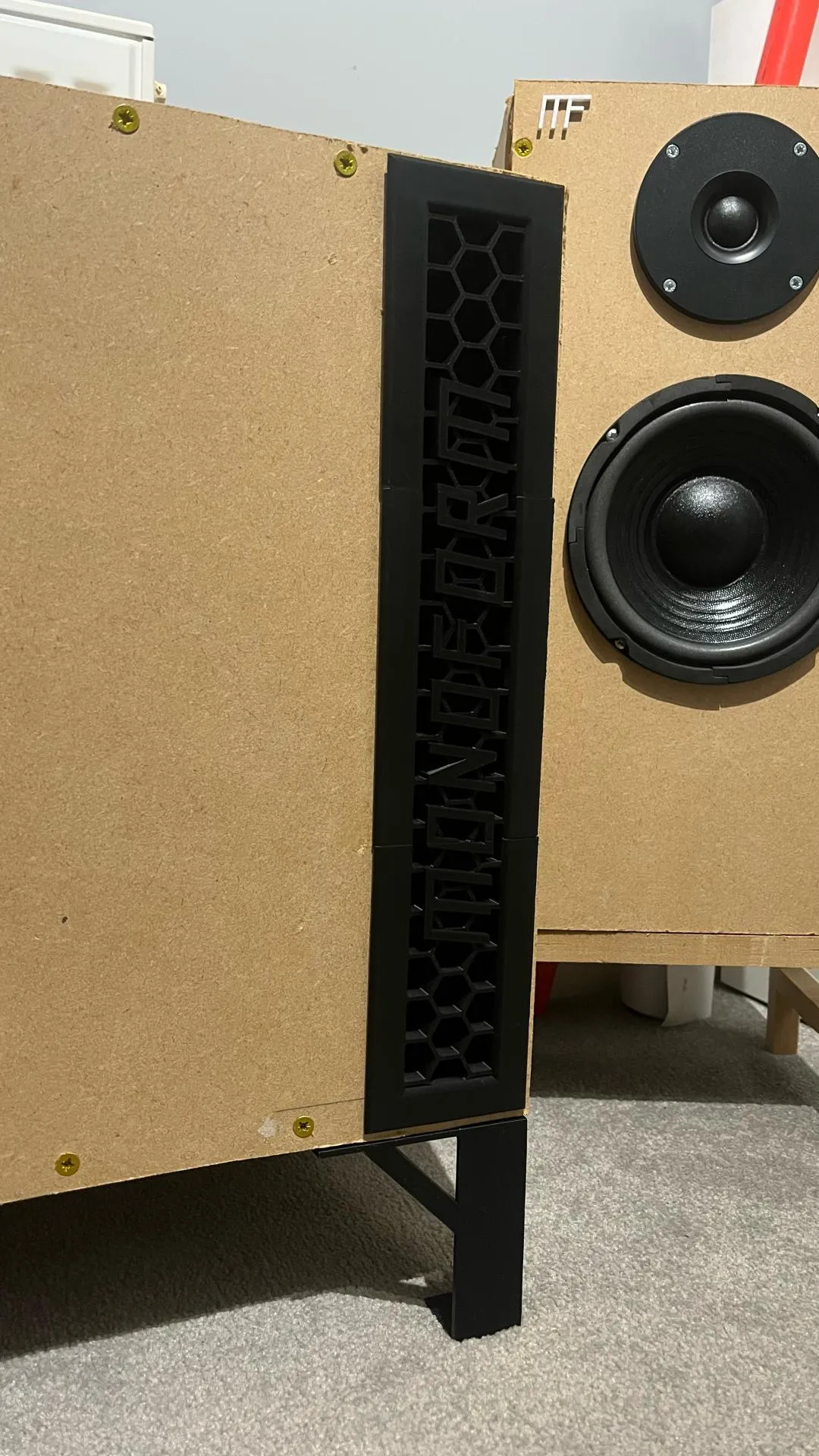
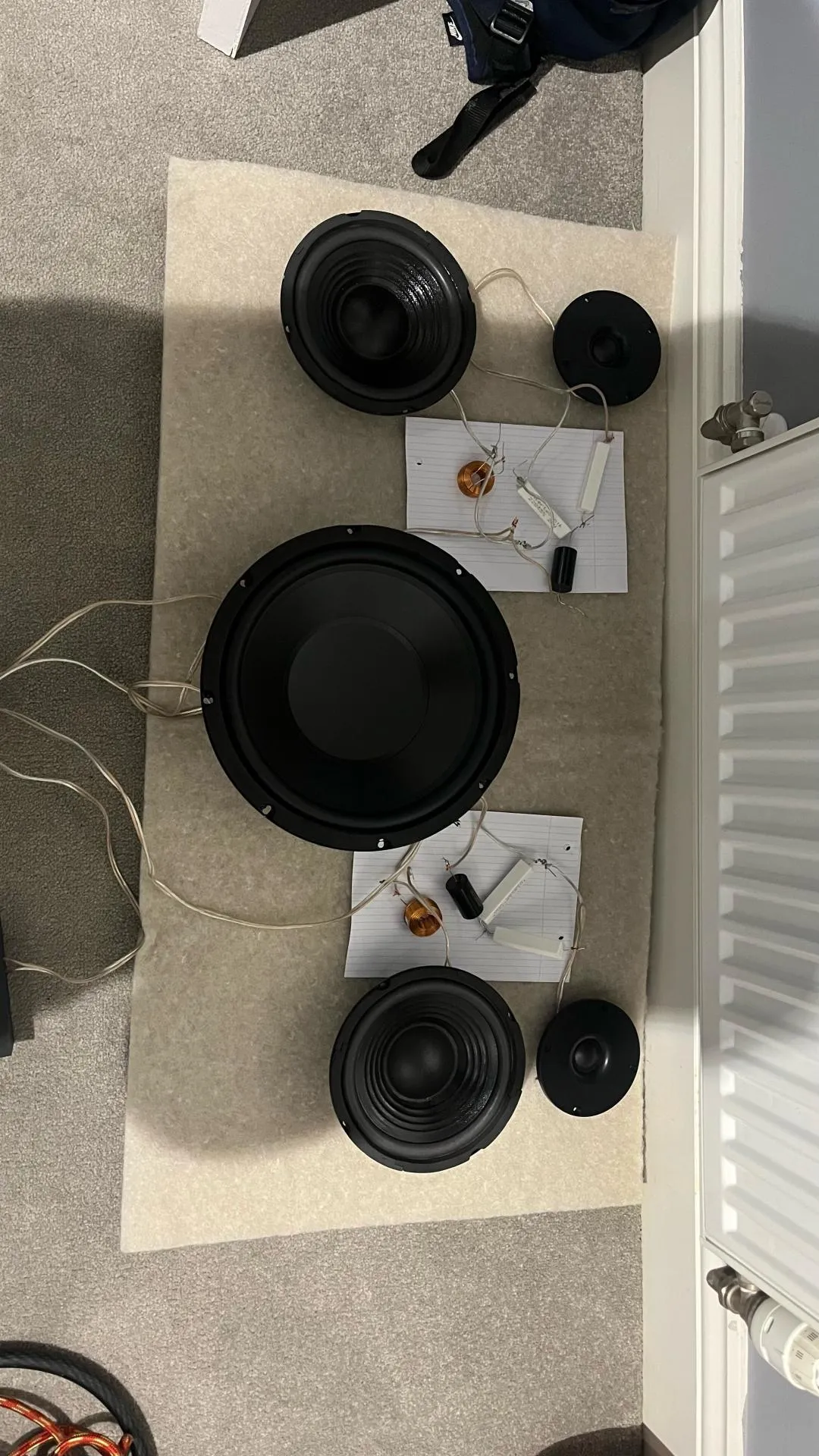
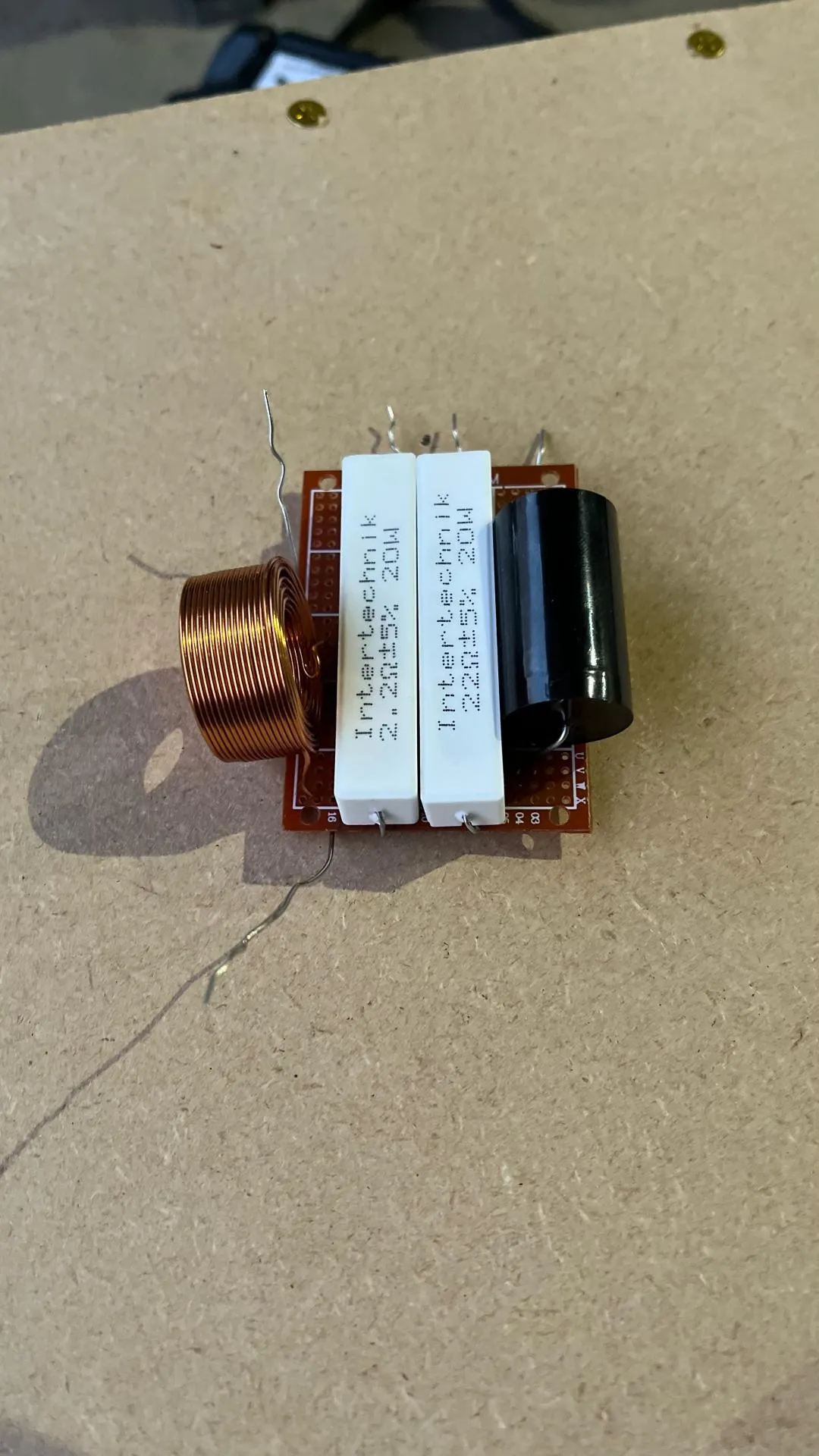
The first system combined a 10-inch subwoofer, 6.5-inch midwoofers and 1-inch silk-dome tweeters, with passive crossover work. The subwoofer used an approximately 60 L enclosure and a folded rectangular port. Enclosure simulation, CAD and 3D-printed details supported the build.
Subjectively, it sounds extremely good to me. That is a listening judgement, not a measured frequency-response, distortion or output claim.
What the build taught me
Manufacturing planning and process discipline needed more attention. Translating CAD into real parts exposed weaknesses in build quality and dimensional accuracy; I did not measure tolerances that would justify a more specific claim.
I also needed to treat calculations and simulations more rigorously and cross-check them against practical constraints. An attractive simulated response does not automatically make a sensible physical product.
Further research expanded my understanding of loudspeaker radiation, wavelength-dependent behaviour, baffle step, waveguides, driver directivity, crossover behaviour and enclosure effects. These are areas informing my next designs, not a claim that I have mastered them.
Lesson: I gave too little weight to physical size. The 10-inch subwoofer enclosure is much too large for its intended practical use. Simulation targets, acoustic behaviour, room and use case, and physical practicality have to be considered together.
In development: active DSP monitors
The current monitor direction uses a Dayton Audio Epique E180HE-44 midwoofer and SB Acoustics SB26ADC tweeter in an approximately 12 L sealed enclosure.
The planned active architecture brings together a Sure/Wondom JAB5 four-channel amplifier, ADAU1701 DSP and Mean Well RSP-320-27 power supply. CAD-designed enclosures and extensive 3D printing are part of the packaging approach.
The tuning approach is intended to use a UMIK-1 measurement microphone alongside simulation and listening. The aim is better control over crossover behaviour and response through measurement-led iteration. This is ongoing development, not a completed pair of monitors or a claim of completed acoustic measurements.
Design study: a 15-inch reflex subwoofer
A separate current study explores a B&C 15TBW100 driver in a reflex enclosure. Concepts have been around 95–105 L with tuning in the upper-30-Hz region; neither volume nor tuning is final.
The central trade-off is maximum output versus low-frequency extension. Enclosure volume, port tuning, excursion, room gain and protection all need to be considered against home and party use.
Different operating conditions
A proposed party preset would prioritise safe high output in the main operating band, using a protective high-pass filter.
A proposed home preset would trade some unused maximum SPL for deeper perceived extension at much lower listening levels, while retaining protection below the reflex operating region. These are design intentions, not validated presets.
The limit below tuning
Below port tuning, port support drops away and cone excursion rises rapidly. Aggressive EQ becomes expensive in cone displacement and amplifier headroom. DSP does not turn a reflex cabinet into a true 20 Hz design.
Current direction
The progression is from a largely simulation-led passive system toward active DSP, acoustic measurement and better manufacturing planning. The completed 2.1 system remains the foundation; the monitors and 15-inch subwoofer remain development work.
The photographs below document the original 2.1 build, not the current monitor or subwoofer concepts.